Attending the Learning Technologies Exhibition & Conference in London this week offered a valuable opportunity to step back and reflect on where the Learning and Development (L&D) field is heading. As one of the most important gathering points for professionals shaping the future of workplace learning, the event consistently reveals not only emerging trends, but also the underlying questions that define them.
Unsurprisingly, artificial intelligence continues to dominate the conversation. From vendors to learning leaders, there is clear momentum around integrating AI into learning ecosystems. However, what stands out even more than the rapid growth of AI is the shift in the questions being asked.
The discussion is no longer simply about what AI can do. Instead, it is increasingly focused on how it should be used. A recurring theme throughout the event was a deceptively simple but critical question: are we using AI to produce more content, or to create better learning experiences?
Across multiple conversations, a common pattern emerged. There is strong interest in AI and a growing willingness to experiment with new tools and approaches. Organizations are actively exploring how AI can support content creation, automate processes, and enhance efficiency. At the same time, there is a clear recognition that technology alone is not enough.
Many learning professionals are now facing a second wave of challenges. As experimentation increases, so does the need for structure, sound pedagogy, and meaningful application. Without these elements, even the most advanced AI tools risk becoming content generators rather than capability builders.
This is where the real opportunity lies. The next phase of AI in learning is not about scaling content production, but about transforming how learning is designed and experienced. It is about moving toward adaptive, practice-based, and human-centred approaches that focus on skill development and performance improvement.
At Human Asset, this perspective is shaping the direction of our work. Rather than treating AI as an isolated innovation, we see it as an enabler of more effective learning ecosystems.
With inSCORM AI, the goal is to bring AI capabilities into existing learning environments without disruption. Organizations can enhance their current SCORM-based infrastructure by embedding intelligent features that support interactivity, responsiveness, and learner engagement without needing to replace what already works.
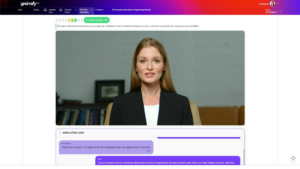
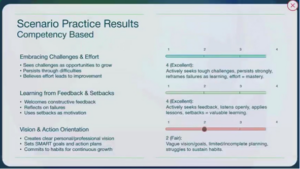
In parallel, gAImify Hub is designed to take a more immersive approach. It enables interactive, gamified, and simulation-based learning experiences that prioritize real skill development. By combining AI with scenario-based practice and feedback, the platform supports learners in applying knowledge in realistic contexts, bridging the gap between learning and performance.
What became clear at Learning Technologies London is that the conversation around AI in L&D is maturing. The focus is gradually shifting from technological capability to learning impact. This is a positive and necessary evolution.
As the field moves forward, the organizations that will stand out are not those that simply adopt AI, but those that use it with intention grounded in pedagogy, aligned with real-world application, and designed around the needs of learners.